
Joao Felicio
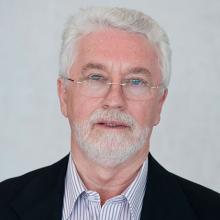
President of the International Trade Union Confederation
João Antonio Felicio was born on November
6,2025 in Itapuí, in the interior of the Brazilian state of São Paulo. He has a higher education
in Design and Plastic Arts, Arts Education and Art History.
He began working at the age of 15 as a butcher in Jaú, in the state of São Paulo. In 1973 he began
teaching Design in São Paulo, within the state education system, where he continues to work today
as a teacher of Art Education (Arts, Arts and Theatre History).
Its political and trade union militancy began in 1977, when it participated in teacher
mobilizations for the improvement of living conditions and wages, and against the military
dictatorship.
In 1978 and 1979, he was a member of the organizing committee during the teachers' strike after
decades of isolation. In the late 1970s he was an active member of the MEP (Movement for the
Emancipation of the Proletariat), a left-wing organization fighting for the end of the military
dictatorship.
In 1980 he participated in the founding of the Workers' Party and in 1981 he was one of the
candidates selected for the APEOESP Board of Directors (Trade Union of Official Teachers of the
State of São Paulo). In 1983, he participated in the process that led to the creation of the CUT,
the Central Unica de Trabajadores.
He was elected president of APEOESP in 1987, and re-elected in 1989 and 1991. That year saw the
longest teachers' strike in history in the state of São Paulo. It lasted eighty-two days and
resulted in a 126% increase in wages.
The following year, as President of APEOESP, he took part in the massive mobilizations that caused
the dismissal of former President Fernando Collor de Mello. In 1993 he left his post as President
of APEOESP to return to education. During that year, the APEOESP reached 122,000 members, of which
70,000 took part in the electoral process, in the largest election in the organization's history.
In 1994, he was nominated by the professors and elected to the National Executive Directorate of
the CUT. In this position he was responsible for the Commission on Education, Vocational Training
and Pensions and, as a member of the International Collective of the CUT, for issues related to
the ILO (International Labour Organization) and Human Rights.
In 1997, he was elected National General Secretary of the CUT and member of the National
Directorate of the Workers' Party. Later in 2000, he was elected National President of the CUT and
the following year he contributed to the creation of the World Social Forum.
In 2002, he was National Mobilization Coordinator of the campaign that elected Lula da Silva as
president. He also participated in the coordination of Lula's re-election campaign in 2006 and
Dilma Roussef's election campaign in 2010. Since 2002, he has been part of the Board of Directors
of the Cidadania Institute of President Lula.
In 2003 he was elected National Secretary General of the CUT. Between 2003 and 2012 he was the
National Trade Union Secretary of the Workers' Party. At the request of the then president, Lula,
he was a member of the Brazilian government's Economic and Social Development Council. He was also
appointed by the CUT as a representative on the Board of Directors of BNDES, Brazil's National
Development Bank.
In 2005, he again served as President of the National CUT. In 2006 he was elected Secretary of
International Relations, being re-elected in 2009 and 2012. In 2007 he was nominated to represent
the CUT in the General Council of the ITUC (International Trade Union Confederation) and in the
Executive Bureau of the CSA (Confederation of Trade Unions of the Americas). He has also been
Vice-President of the ITUC and in 2014 he was elected President of the ITUC.